
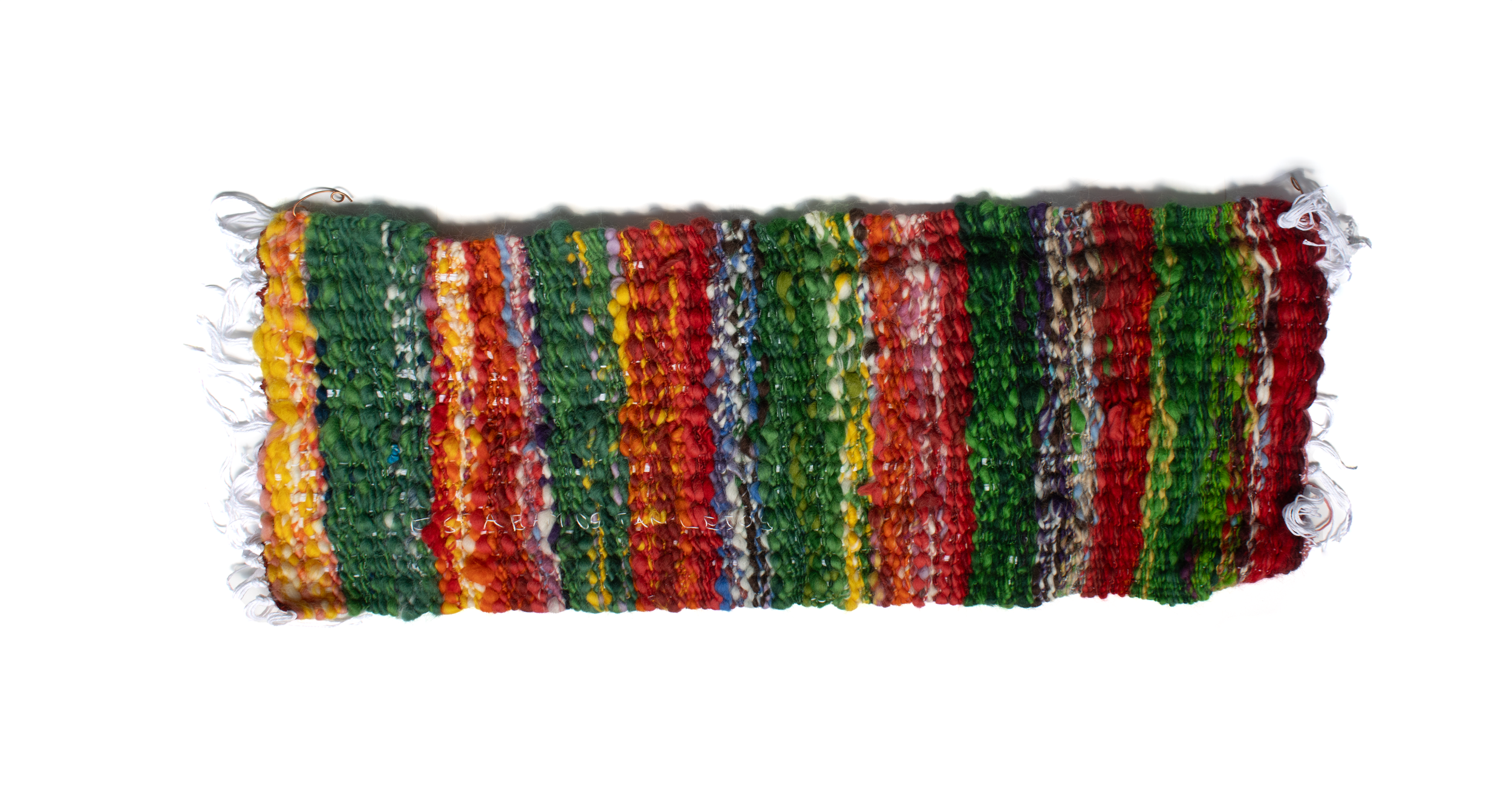


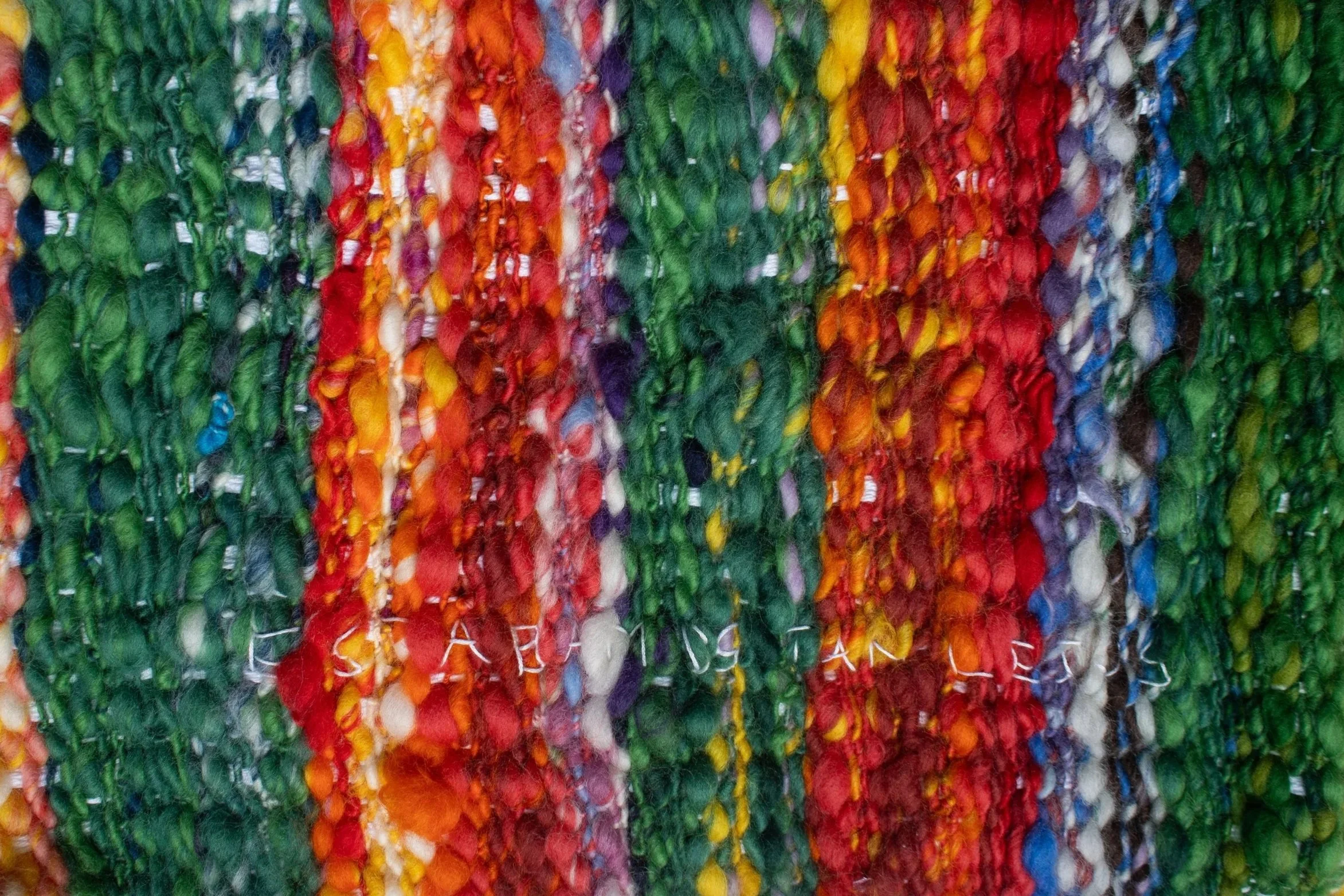
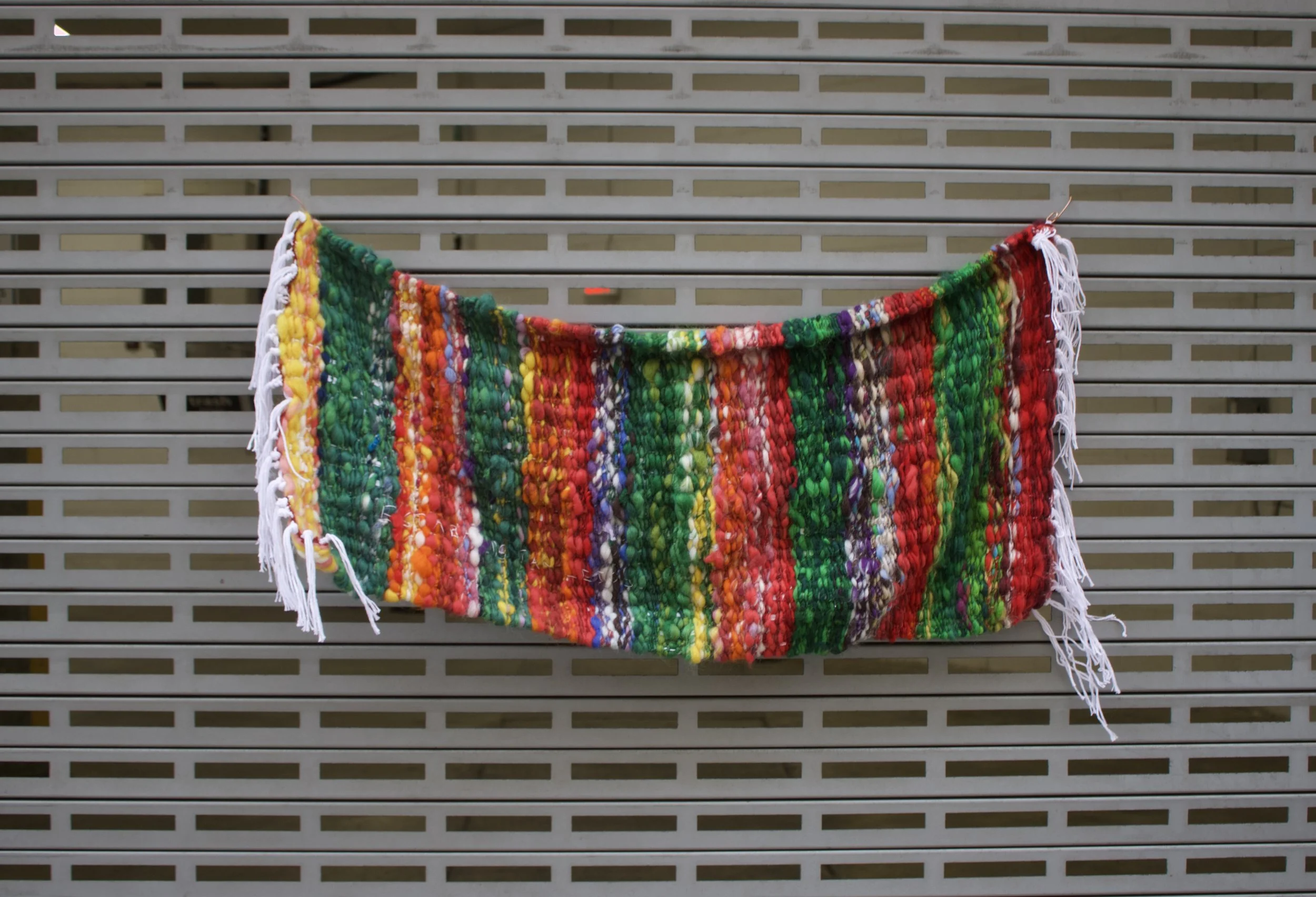
Paine Watermelon Weaving No. 2 (Testimony of Holanda Vidal, wife of Cristian Víctor Cartagena Pérez, detained-disappeared on September 18, 1973, ‘Estábamos tan lejos’)
2026
Hand-spun wool sourced from Chile, cotton
50 x 19 inches
Paine, a small village south of Santiago, has the highest per-capita rate of detained-disappeared people in Chile. During the Pinochet dictatorship, hundreds of people — especially leftist activists — were arrested by the police and, after suffering torture and execution in clandestine conditions, were never seen again by their families. Knowledge of their whereabouts is still unknown. Paine was particularly targeted because of the strength of leftist activism in the town. Leftists demanded land and better working conditions against local landowners, such as the Kast family, low-ranking Nazi party members who escaped accountability in Germany to build agricultural businesses in rural Chile.
Over the past ten years, Chile’s economy has begun to shift from hyper-extractive forms of agriculture and mining to an economy that centers tourism. The Chilean government has created programs to sponsor and brand “agricultural heritage” and “cultural resources” as national patrimony for visitors to see. One such program, the Sello de Origen, endows a list of quintessentially Chilean products with an “origin seal” of cultural authenticity. On the list include watermelons from Paine, alongside craft products like Chilean wool weavings.
This wearable tapestry shows another form of Chilean heritage, one that is rooted in the centrality of Paine not as an idyllic rural town, but as the origin place of radical activism, a site where police disappeared people and facts, and a community that continues to remember. The words of Holanda Vidal, wife of a disappeared Communist Party activist, are embroidered onto an Andean chamanto, also available as tapestry.
The form makes wearable and visible the tension Vidal identifies - that even those “far away” from city centers are deeply affected by political violence. A core-periphery world system is obliterated when we realize lejanía can be an insidious way to brand disappearance.