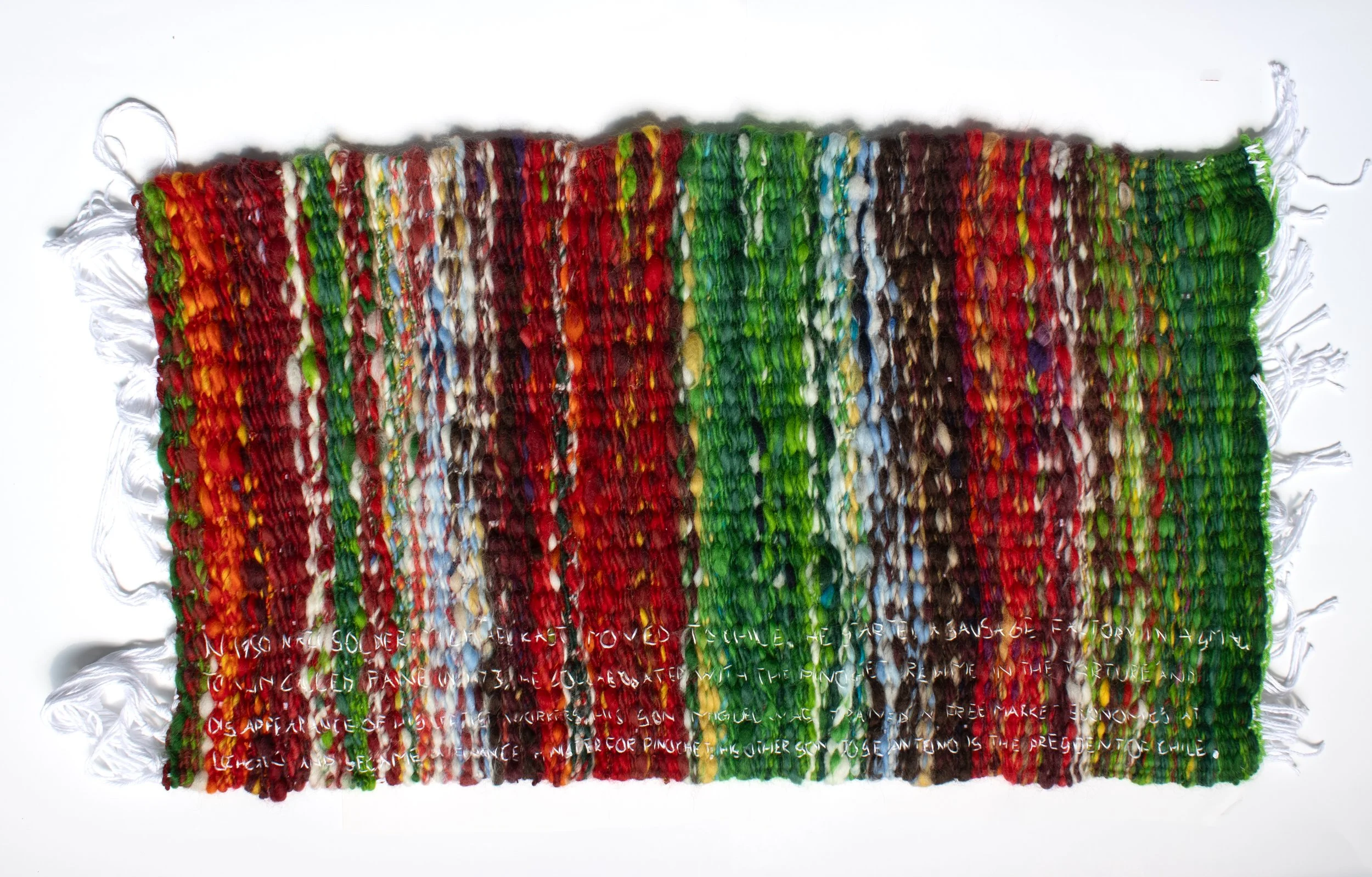
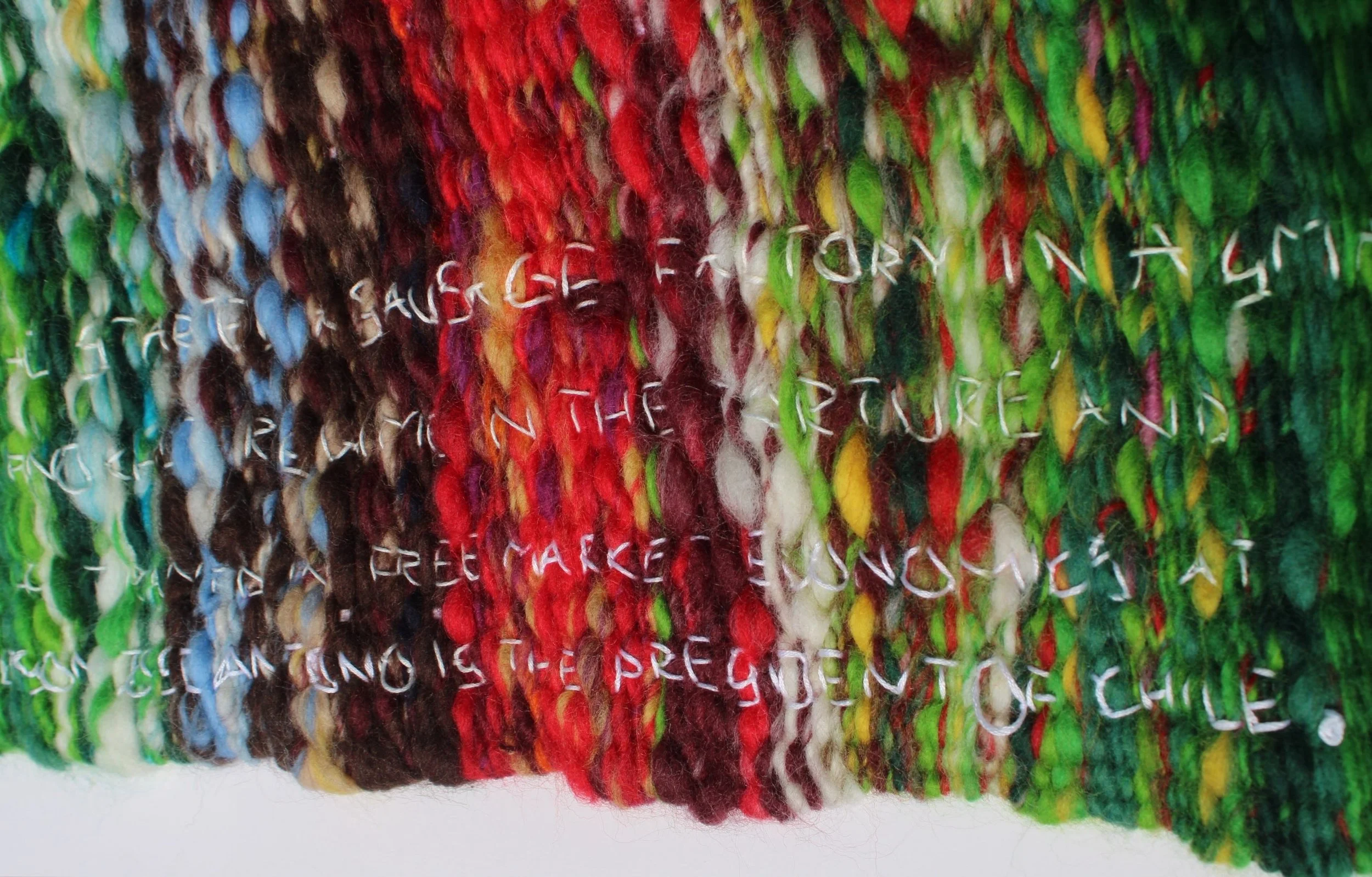
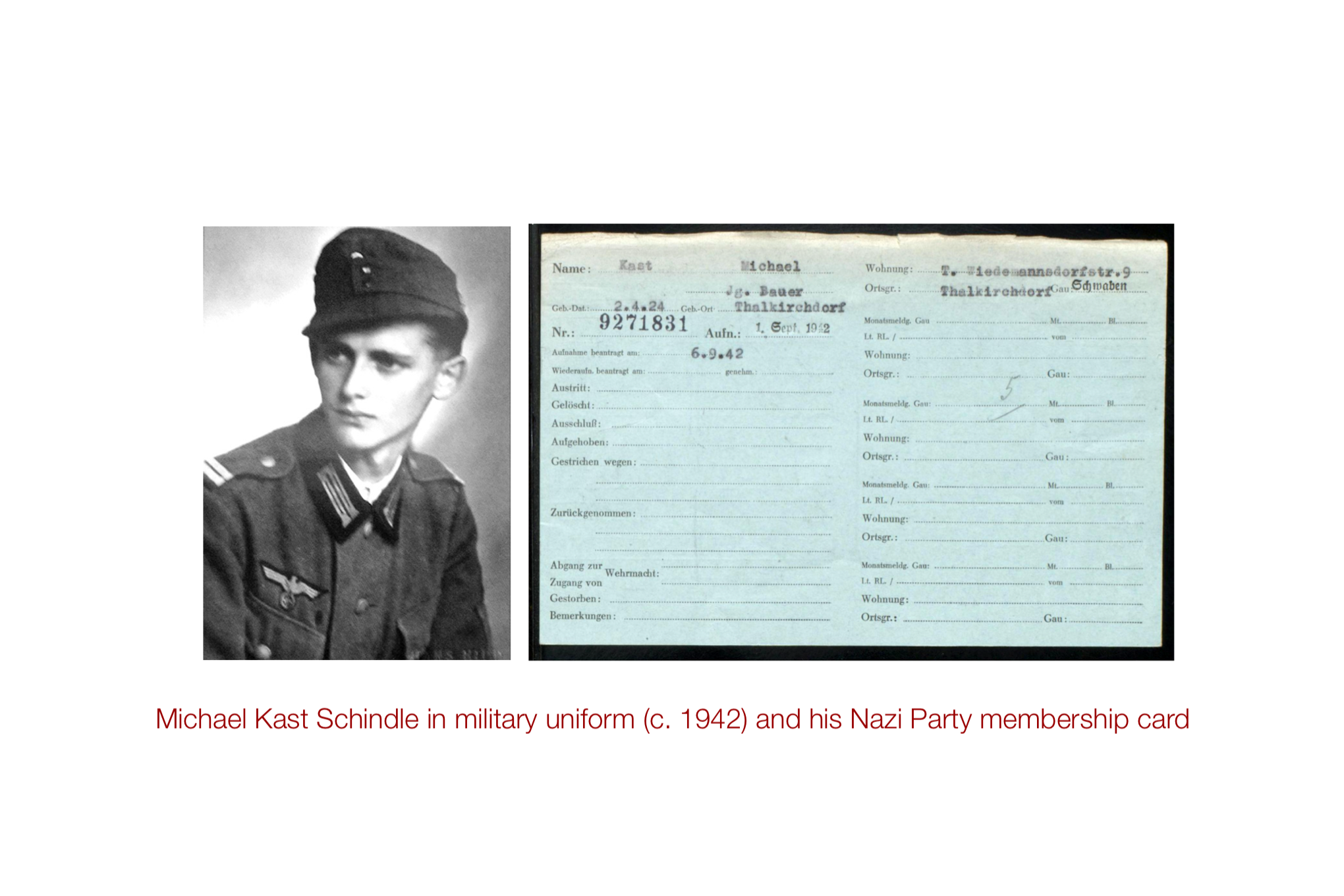
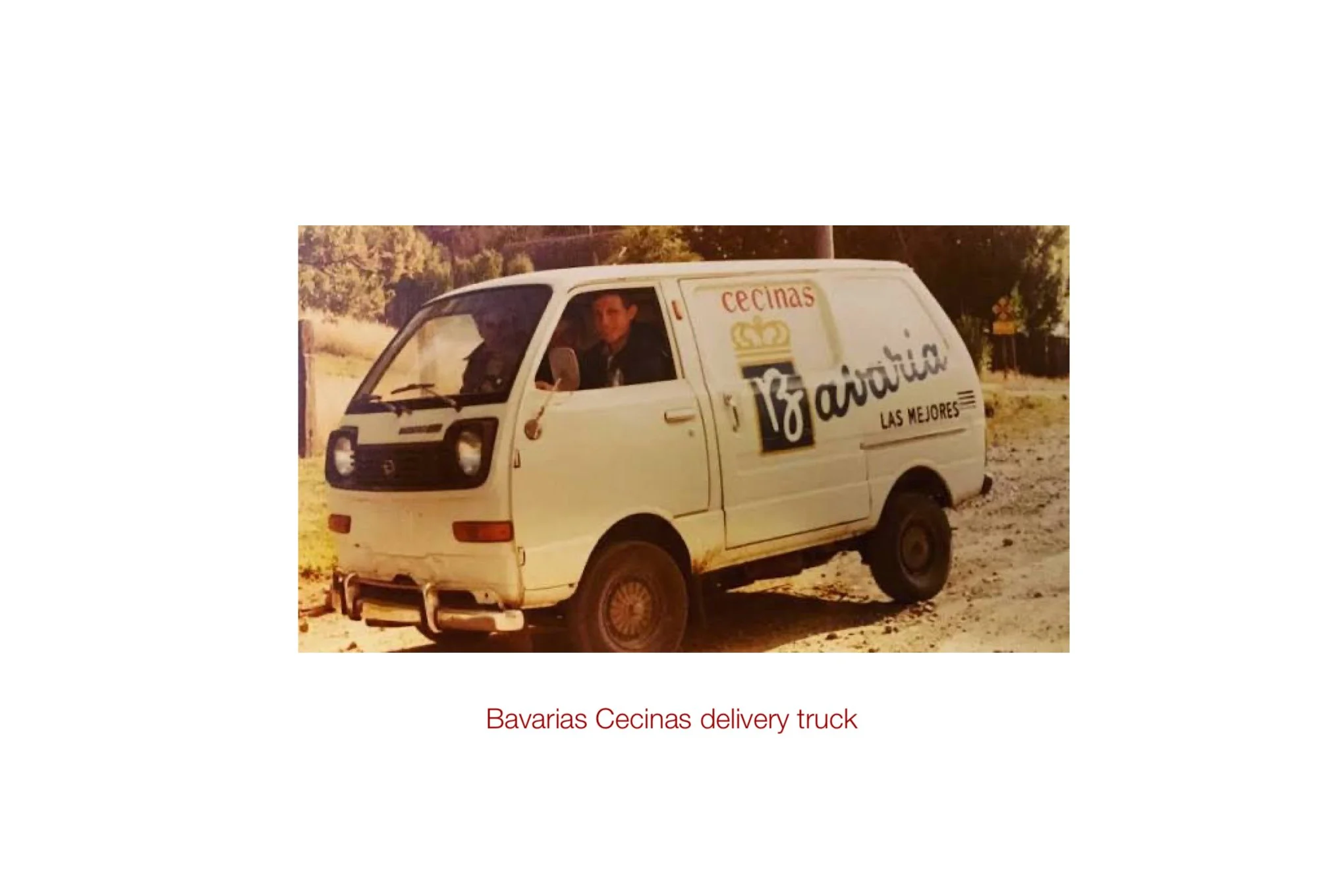
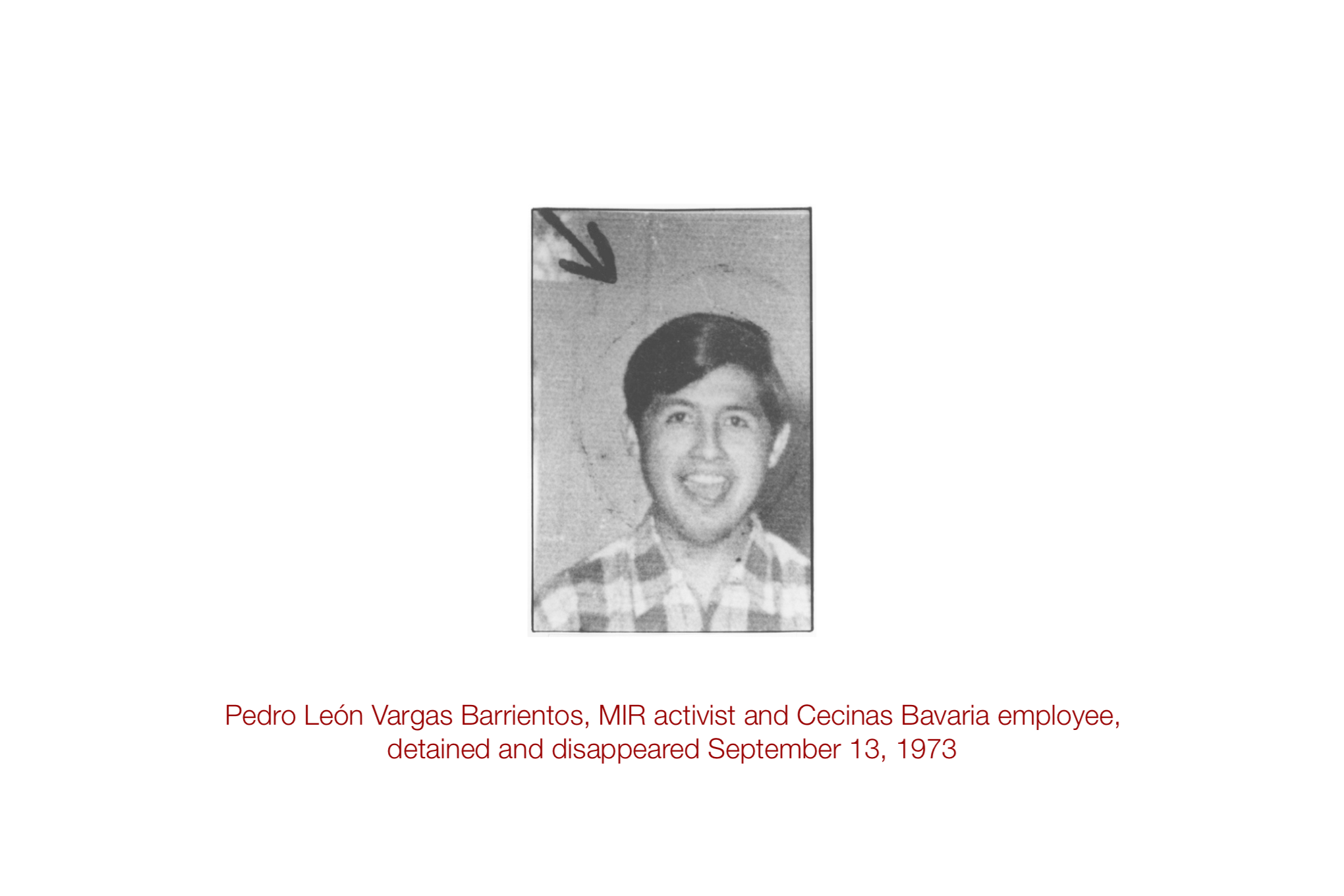
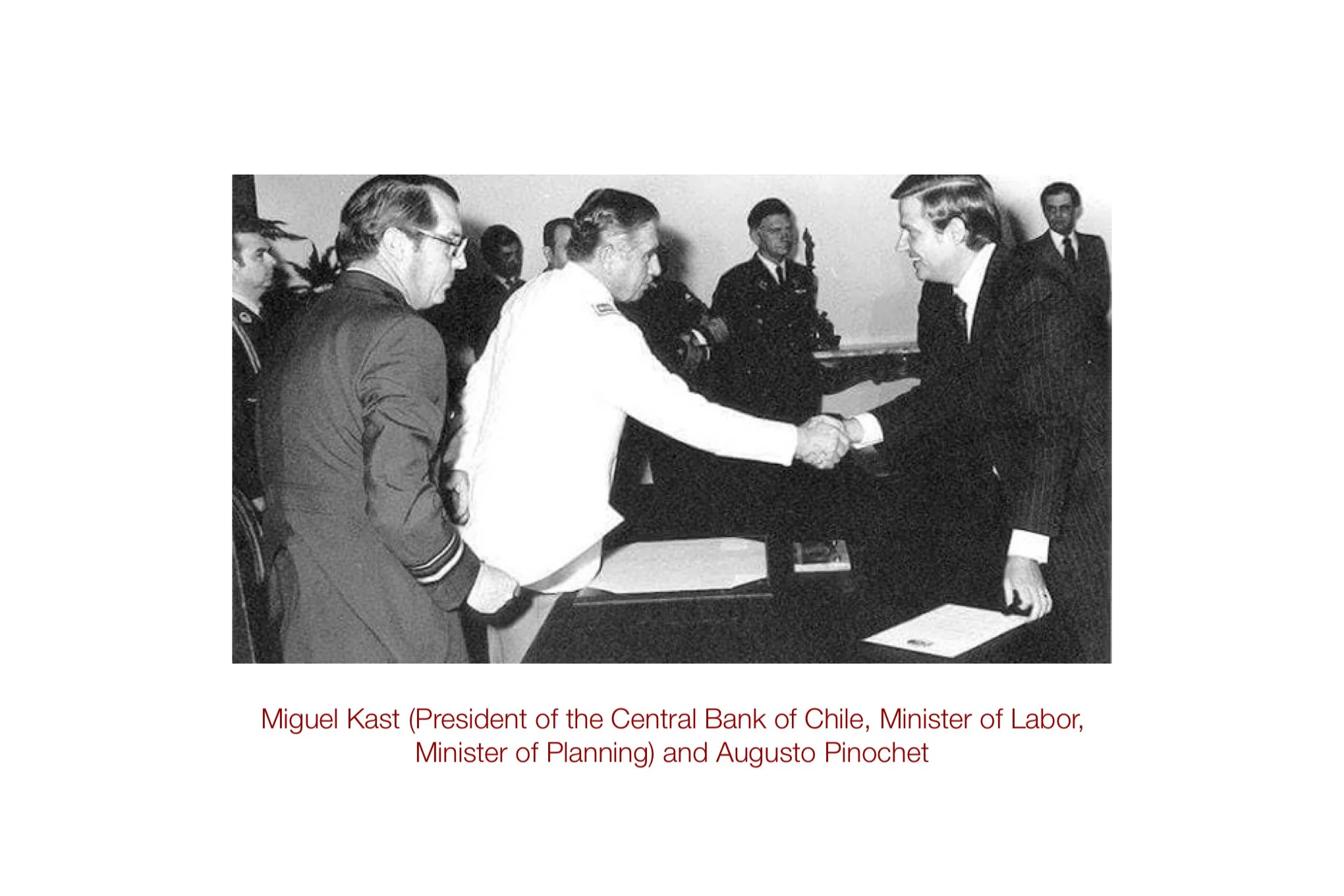
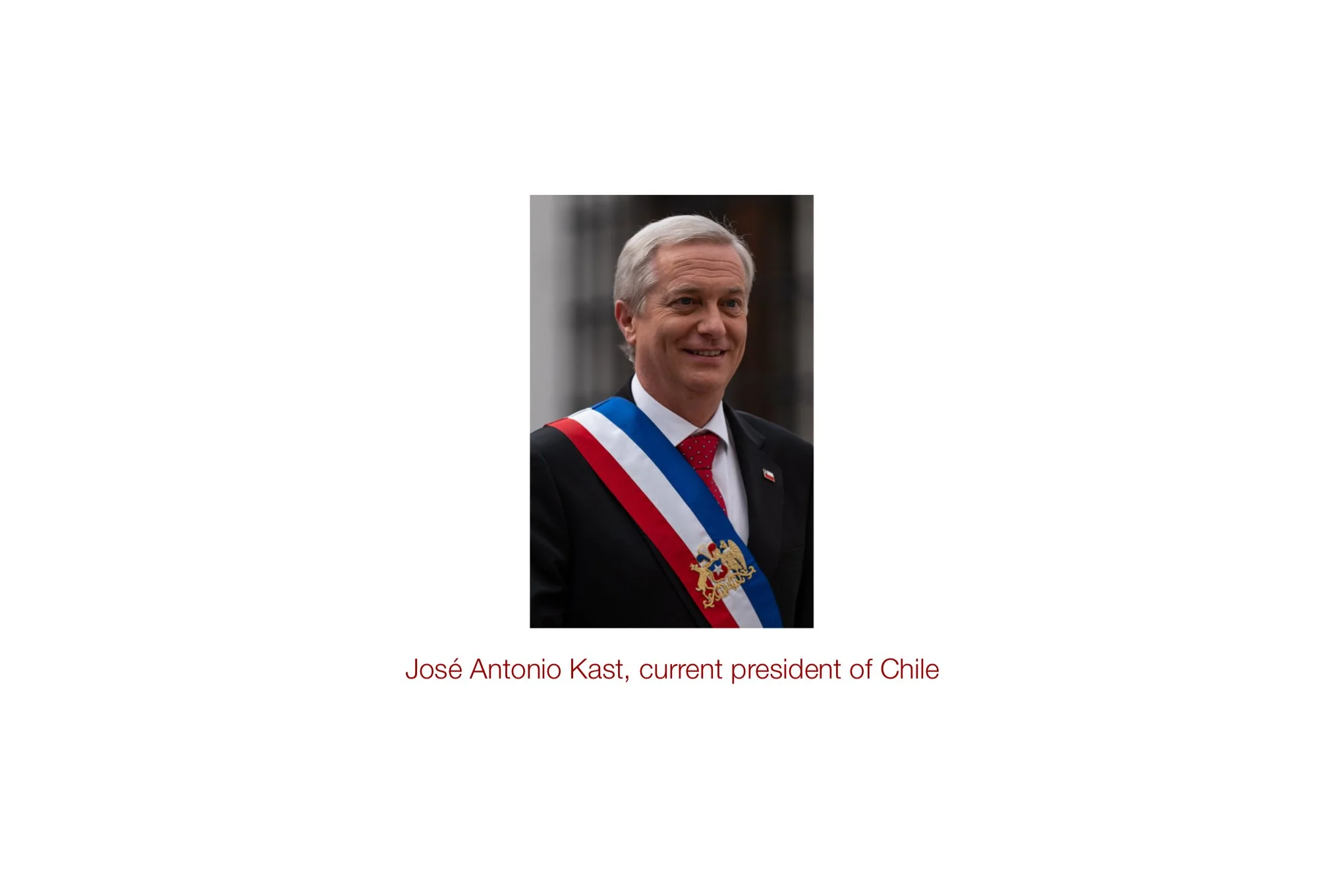
Paine Watermelon Weaving No. 1 (In 1950, Nazi soldier Michael Kast moved to Chile. He started a sausage factory in a small town called Paine. In 1973, he collaborated with the Pinochet regime in the torture and disappearance of his leftist workers. His son Miguel was trained in free market economics at UChicago and became a finance minister for Pinochet. His other son José Antonio is the president of Chile)
2026 Hand-spun wool sourced from Chile, cotton 45 x 19 inches
In my Paine Watermelon Weaving series, I explore the capacity for tapestries to combat attempts made by state actors to limit the meaning of fiber art and design to squarely fit within national cultural patrimony or “heritage craft” programs. Inspired by the Chilean Culture Ministry’s listing of “Paine watermelons” as national cultural patrimony, I use the watermelon weaving pattern to tell another story about the small town of Paine, outside of Santiago. I narrate how a remote agricultural village plays a central role in the survival and continual reformulation of multiple waves of twentieth century acts of state terror and genocide. Paine, and the people who work or eat or weave or do whatever else inside of it, are at the center of the history of capital and the world. The way that artists and others participate in the branding of these places is not tangential, we create the structures of feeling from which political and economic possibilities and relations can come into form.