
Huellas
2025
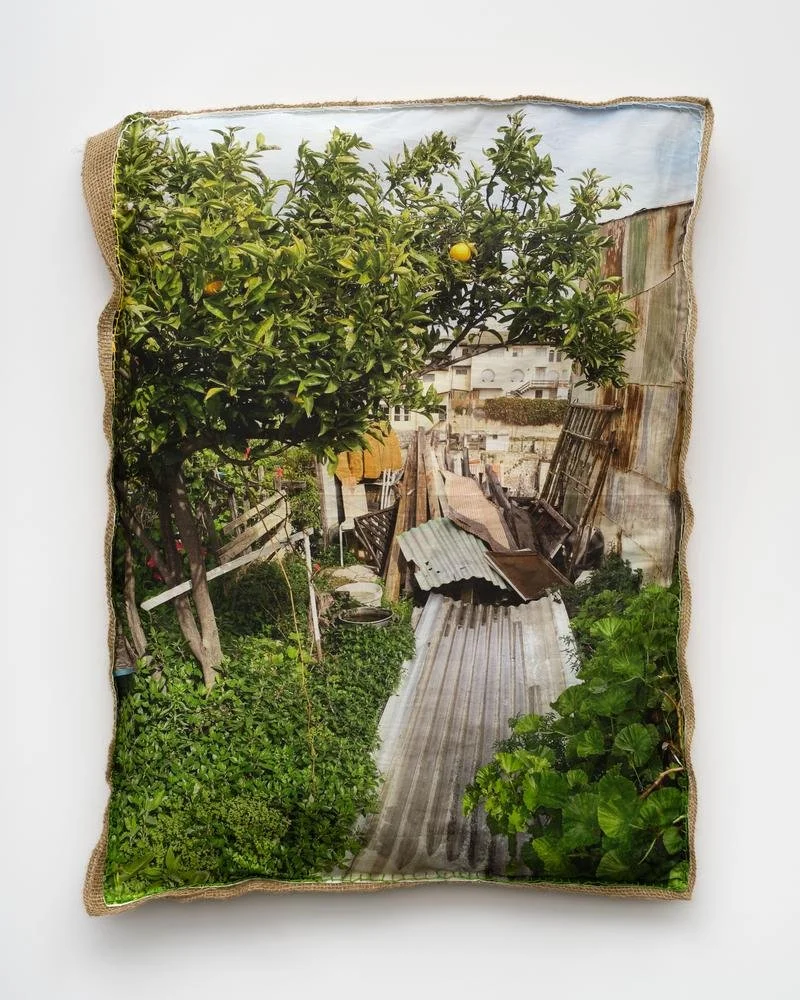
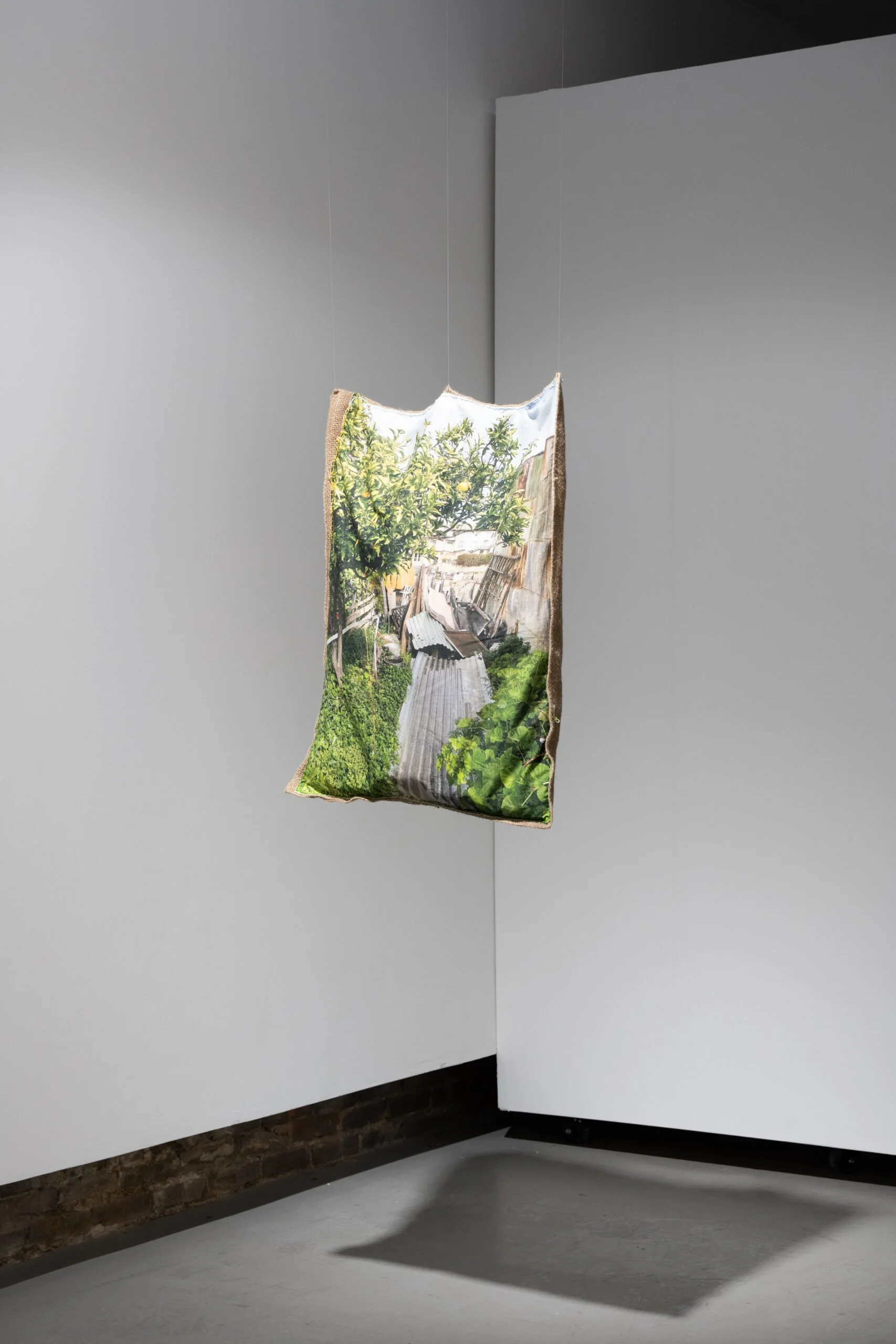
Photographic arpillera: photograph printed on cotton, burlap, polyester embroidery thread, poly stuffing
35 × 25 × 5 in
After the 1973 coup of Salvador Allende and the onset of the Pinochet dictatorship, various solidarity organizations, churches, and poblador groups began to organize “arpillera” workshops in Chile. Women would gather, often clandestinely, to create fiber-based sewn appliqué images, depicting scenes of political violence. Famous arpilleras include scenes of the coup itself or mass arrests. Formally, these artworks were characterized by scrap fabric pieces sewn onto burlap (or “arpillera” in spanish) with blanket stitch linings. (Arpillera in deck is “Hornos de Lonquén,” part of fondo Fundación Solidaridad, Museo de la Memoria y los Derechos Humanos).
I am interested in the arpillera not only as a formal object, but also, as a method. At its core, the arpillera emerged as a way to document and represent political violence occurring around their makers. Being an arpillerista is about sewing together layers of archival compromisos (promises/commitments) of witnessing. In museological projects like estates, archives, or collections, arpilleras offer textural and corporal windows into self-documented life, not only symbolically representing their subject matter but also indexing the epistemological and political conditions of their creation.
Using photography and arpillera-producing fiber techniques, I document the life that surrounds my family’s población in Caleta Abarca. My arpillera congeals moments, flutterings, and textures of poblador nostalgia, centering the everyday, ordinary affects of life after dictatorship.
This arpillera is an image of the rubble I found awaiting me the first time I visited my mother’s childhood home in Población Caleta Abarca, left unoccupied since 1973 when the dictatorship began.